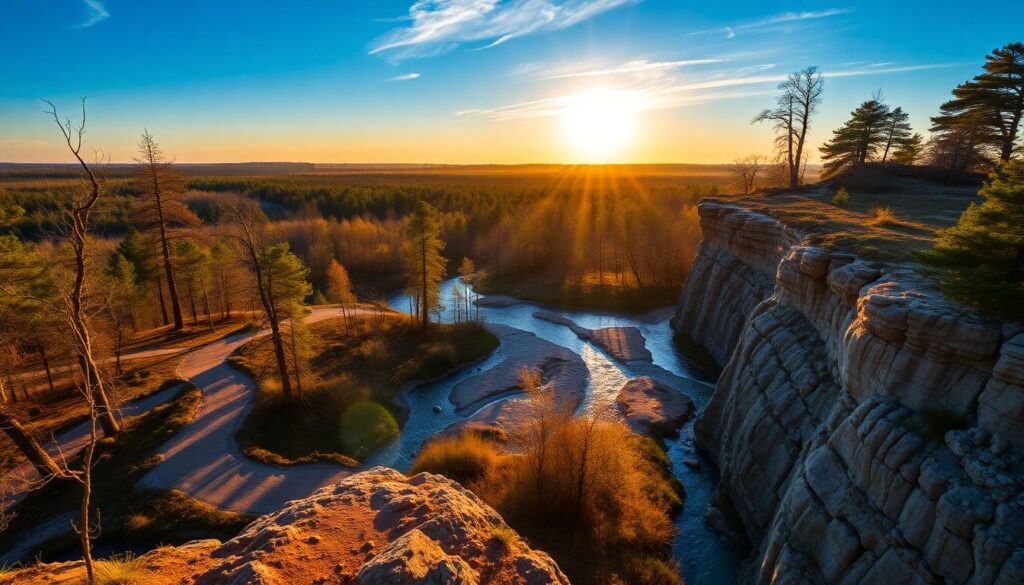
Imagine the vast, open sky stretching infinitely above you, the rhythmic whisper of the wind through acres of towering grasses, and the distant, shimmering blue of the St. Croix River. This is the sensory embrace awaiting you at the Afton State Park Prairie, a truly unique natural sanctuary just a short drive from the Twin Cities. Here, the meticulously restored prairie ecosystem offers a profound connection to Minnesota’s natural heritage, inviting you to wander through a landscape shaped by glaciers and sustained by relentless conservation efforts, feeling the very pulse of the land beneath your feet.
Trail Specifications
- Trail Name: Afton State Park Prairie Loop
- Location: Hastings, MN
- Distance: Approximately 4-5 miles (various loops available)
- Elevation Gain: 300-400 feet (rolling hills, descent to river)
- Difficulty: Moderate
- GPS Coordinates: 44.8213° N, 92.7725° W (Visitor Center)
- Best Season: Spring through Fall
- Dog-Friendly: Yes, on leash
Route Overview & Natural Highlights
The trails at Afton State Park traverse a captivating landscape that blends restored tallgrass prairie with dramatic bluffs overlooking the St. Croix National Scenic Riverway. As you descend from the park’s main visitor center, you immediately enter a rolling sea of native grasses and wildflowers. This area is a prime example of Minnesota’s glacial legacy, with undulating moraines creating a topography that offers both challenging ascents and sweeping vistas. The prairie itself is a vibrant ecosystem, meticulously managed to foster biodiversity.
Keep your eyes peeled for characteristic prairie plants like Big Bluestem (often reaching heights of 8 feet in late summer), Indian Grass, and Switchgrass, which provide essential habitat and food for wildlife. In warmer months, the prairie explodes with color from wildflowers such as Purple Coneflower, Wild Bergamot, and various asters. The geology here is equally fascinating; you’ll notice exposed sandstone bluffs along the river, remnants of ancient seas that once covered this region. Birdwatching is exceptional, particularly during migration, with species like Eastern Meadowlarks, Grasshopper Sparrows, and various raptors soaring overhead. White-tailed deer are common, and if you’re lucky, you might even spot a badger or a red fox moving through the dense foliage. The park’s commitment to prairie restoration makes it a living laboratory and a testament to ecological resilience.
Turn-by-Turn Trail Breakdown
Trailhead Start: Descending into the Prairie
Your journey begins at the main visitor center. After a quick stop to check the map and perhaps use the facilities, head towards the main trail access point. The initial segment involves a noticeable descent down a wide, well-maintained gravel path. This immediate drop in elevation quickly immerses you into the heart of the prairie. You’ll pass through areas of mixed oak savanna and prairie, with scattered Bur Oak trees providing intermittent shade. Listen for the rustling of grasses and the calls of prairie birds. The path here is generally wide and easy to navigate, offering expansive views almost immediately.
Mid-Trail Features: Rolling Hills and River Views
As you continue, the trail transforms into a network of narrower dirt paths winding through the prairie’s rolling terrain. You’ll encounter several gentle climbs and descents, often leading to magnificent viewpoints. One particularly rewarding section offers panoramic vistas of the St. Croix River, a federally protected waterway that forms part of the Minnesota-Wisconsin border. On clear days, you can see for miles across the river valley. The trail might take you near a small stream or a marshy area, indicated by different plant communities like cattails and sedges. This is an excellent spot to observe dragonflies and frogs. The path is well-marked with signage, guiding you through the various loops that make up the prairie system.
Summit/Destination & Return: Open Vistas and the Ascent Back
The “summit” of this prairie experience isn’t a singular peak but rather the expansive feeling of being utterly surrounded by the open grassland. Many trails converge and diverge, allowing you to choose your desired distance. A common destination is a loop that circles back towards the main descent path. Take time to pause and appreciate the sheer scale of the prairie. When it’s time to return, be prepared for the ascent back to the visitor center. While not overly steep, the consistent climb after your wanderings can be a good workout. The return journey offers a different perspective on the landscape, with the visitor center slowly coming into view as you gain elevation, concluding your immersive prairie adventure.
Seasonal Guide & Best Times
- Spring (April – May): The prairie awakens with fresh green shoots and early wildflowers like Pasque Flowers and Bird’s-foot Violets. Bird migration is in full swing, offering excellent birdwatching opportunities. Temperatures are mild and pleasant.
- Summer (June – August): The prairie reaches its peak lushness, with tall grasses and a spectacular display of wildflowers, including the iconic Purple Coneflower and Blazing Star. Be prepared for sun exposure and potential humidity. Early mornings or late afternoons are ideal to avoid the midday heat.
- Autumn (September – October): A truly magical time as the grasses turn golden and russet, painting the landscape in warm hues. Cooler temperatures, fewer bugs, and crisp air make for invigorating hikes. The fall colors along the river bluffs are also a sight to behold.
- Winter (November – March): The prairie transforms into a serene, snow-covered expanse. Snowshoeing and cross-country skiing are popular, offering a quiet, stark beauty. Trails can be windswept, so dress in layers. Check park conditions for trail accessibility.
Essential Gear & Safety
- Water & Snacks: Carry more than you think you’ll need, especially on hot days. There are no water sources on the trails.
- Sun Protection: The prairie offers very little shade. A wide-brimmed hat, sunglasses, and sunscreen are crucial.
- Sturdy Footwear: Trails can be uneven, and the grass can be tall and wet. Hiking boots or sturdy trail shoes are recommended.
- Navigation: While trails are marked, a map (available at the visitor center or online) or a GPS app like AllTrails is helpful. You can find more details and download maps for Afton State Park here: AllTrails – Afton State Park.
- Layered Clothing: Prairie weather can change quickly. Layers allow you to adapt to temperature fluctuations.
- Leave No Trace: Pack out everything you pack in. Stay on marked trails to protect the delicate prairie ecosystem.
Getting There & Parking
Afton State Park is conveniently located near Hastings, Minnesota. From the Twin Cities, take I-94 East to County Road 15 (Manning Avenue), then head south. Turn east onto 70th Street South, which leads directly to the park entrance. Alternatively, from Hastings, follow State Highway 95 north to 70th Street South. The park is well-signed.
Upon arrival, you will need a Minnesota State Park vehicle permit, which can be purchased at the park entrance or online. A daily permit costs $7, or an annual permit is $35. Parking is ample at the main visitor center lot. The park generally opens at 8:00 AM and closes at 10:00 PM daily, though specific visitor center hours may vary. Always check the official Minnesota DNR website for the most current information regarding hours, fees, and trail conditions before your visit.
Curated Literature & Minneapolis Downtown Calendar
The Architecture of Focus: Deep Work & Modern Mastery
By Founders Library Press
A structured framework for strategic clarity, productivity, and authentic execution.
Upcoming Downtown Happenings
Live acoustic sessions, gallery receptions, literary salons, and independent trade shows across Minneapolis.