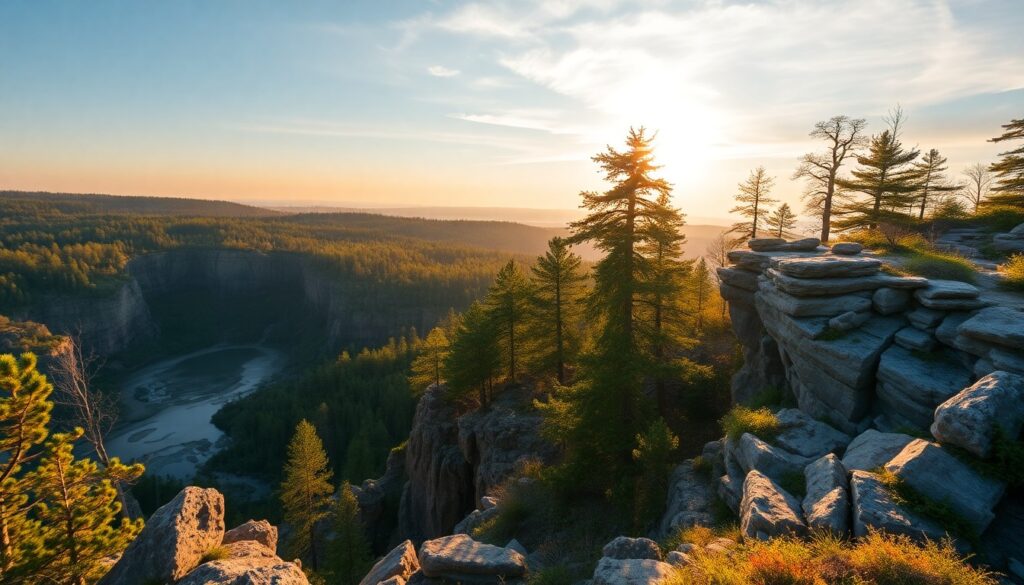
As the gentle breeze whispers through the budding canopy, carrying the scent of damp earth and awakening flora, you step onto the path, ready to immerse yourself in nature’s delicate artistry. Here, on the Theodore Wirth Wildflower trail, the forest floor transforms into a living canvas, each spring ushering in a breathtaking display of native blossoms. Dappled sunlight filters through the nascent leaves of oak and maple, illuminating the unfolding petals of trillium and bloodroot, inviting you into a serene world where time seems to slow with every rustling leaf and chirping bird.
Trail Specifications
Trail Name: Theodore Wirth Wildflower Trail Loop
Location: Theodore Wirth Regional Park, Golden Valley, MN
Distance: Approximately 1.7 miles (2.7 km) loop
Elevation Gain: Roughly 80 feet (24 m)
Difficulty: Easy
GPS Coordinates: 44.9780° N, 93.3550° W (Near Eloise Butler Wildflower Garden entrance)
Best Season: Spring (late April – early June) for peak wildflowers, Autumn for fall foliage
Dog-Friendly: Yes, on leash
Route Overview & Natural Highlights
This gentle loop guides you through a diverse landscape characteristic of Minnesota’s urban wilds. The terrain is mostly flat with a few subtle undulations, consisting of packed earth paths, well-maintained boardwalks, and occasional stretches of fine gravel. You’ll traverse a rich mosaic of ecological zones, primarily a mature deciduous forest dominated by towering Northern Red Oaks (*Quercus rubra*), Sugar Maples (*Acer saccharum*), and American Basswoods (*Tilia americana*). Interspersed within these woodlands are pockets of wetland, fed by the winding Bassett Creek, and small, restored prairie sections that add another layer of botanical interest.
The true spectacle here lies in the understory. In spring, the forest floor erupts with ephemeral wildflowers, including the iconic Great White Trillium (*Trillium grandiflorum*), the delicate Bloodroot (*Sanguinaria canadensis*), and clusters of Wild Geranium (*Geranium maculatum*). Later in the season, you might spot the vibrant Narrow-leaved Coneflower (*Echinacea angustifolia*) in sunnier spots. The geological story beneath your feet is one of glacial retreat, leaving behind the rolling till and subtle moraines that shape the park’s contours. Keep an eye out for wildlife; White-tailed Deer are common, Eastern Gray Squirrels chatter from the branches, and a symphony of bird calls from species like the Downy Woodpecker, Ovenbird, and Common Yellowthroat fills the air, especially near the adjacent Eloise Butler Wildflower Garden and Bird Sanctuary, a nearby semantic entity that shares this rich ecosystem.
Turn-by-Turn Trail Breakdown
Trailhead Start
Your journey typically begins from the parking area near the Eloise Butler Wildflower Garden and Bird Sanctuary entrance, off Theodore Wirth Parkway. Look for the clear signage indicating the start of the Wildflower Trail Loop. The initial segment of the path is wide and welcoming, gently leading you into the dense woods. You’ll immediately feel the temperature drop a few degrees as the canopy embraces you, and the sounds of the city begin to recede, replaced by the rustle of leaves and bird song. This early stretch often showcases some of the earliest spring ephemerals, especially along the edges of the path.
Mid-Trail Features
As you delve deeper, the trail narrows slightly, winding through mature stands of oak and maple. You’ll encounter several well-constructed wooden boardwalks that guide you over marshier sections and across small tributaries feeding into Bassett Creek. These elevated pathways provide excellent vantage points for observing wetland plants and offer a glimpse into the diverse microhabitats within the park. One notable feature you might pass is near the Quaking Bog, a unique sphagnum bog ecosystem that vibrates underfoot, though the main wildflower trail skirts its edge, offering a sense of its ancient, peat-rich environment. Look for mosses and ferns thriving in the shade, and listen for the distinct calls of wetland birds.
Summit/Destination & Return
The loop continues its gentle traverse, eventually reaching its furthest point from the trailhead before curving back. There isn’t a singular “summit” on this trail, but rather a continuous experience of natural beauty. The return leg often parallels portions of Bassett Creek, offering tranquil water views and a different perspective on the surrounding forest. This section often features some of the most concentrated wildflower displays, particularly in late spring, where the forest floor can be a carpet of white, purple, and yellow. The path remains well-marked, guiding you seamlessly back to your starting point, leaving you refreshed and invigorated by the natural splendor.
Seasonal Guide & Best Times
- Spring (April – Early June): This is the prime time to experience the Theodore Wirth Wildflower trail. April brings early bloomers like Pasque Flower and Bloodroot, while May and early June showcase the peak displays of Trillium, Wild Geranium, and various violets. The forest is vibrant with fresh, light green foliage.
- Summer (Mid-June – August): The canopy is full and lush, providing welcome shade. While many spring ephemerals have faded, you’ll find later-blooming wildflowers such as Coneflowers, Asters, and Goldenrod in sunnier clearings. The trail offers a cool, verdant escape from summer heat.
- Autumn (September – October): A spectacular time for vibrant fall foliage as the oaks, maples, and basswoods transform into brilliant reds, oranges, and golds. The air is crisp, and insect activity diminishes, offering clear, refreshing hikes.
- Winter (November – March): While wildflowers are dormant, the trail transforms into a serene winter wonderland. It’s perfect for quiet snowshoeing or cross-country skiing when snow conditions allow. The bare trees provide expansive views, and animal tracks are easily visible in the snow.
Essential Gear & Safety
- Comfortable Footwear: Sturdy walking shoes or light hiking boots are recommended, especially after rain when paths can be damp.
- Water Bottle: Stay hydrated, even on shorter hikes.
- Insect Repellent: Particularly important during late spring and summer to deter mosquitoes and ticks.
- Layered Clothing: The weather can change, and the forest canopy can make it cooler than open areas.
- Sun Protection: A hat and sunscreen are advisable for sunnier sections of the trail.
- Trail Information: For more detailed maps and current conditions, consult AllTrails.
Getting There & Parking
The Theodore Wirth Wild
Curated Literature & Minneapolis Downtown Calendar
The Architecture of Focus: Deep Work & Modern Mastery
By Founders Library Press
A structured framework for strategic clarity, productivity, and authentic execution.
Upcoming Downtown Happenings
Live acoustic sessions, gallery receptions, literary salons, and independent trade shows across Minneapolis.